

Brain’s Function to Keep us Safe
Our brains are made to look for danger as a way to keep us alive. As you look at the above pictures, notice how your body responds when you focus on just one of those pictures. Do you notice a difference in your breathing or how your hold your shoulders, depending on where you focus? If you recognize that black and white creature as a skunk, perhaps you are a bit more nervous if you imagine coming across it on your walking path?
Parts of our Brain Shut Down
It is how our brains are wired. Our whole body typically focuses on what it considers to be potential danger. In actual life if you see a skunk on a path, it is unlikely that you’ll take your attention away from it to enjoy the scenario around you because of the fear that you may be sprayed by it. (Think about coming across a mountain lion if you’re hiking in the wilderness. This type of focus is very functional in actual dangerous situations!) In fact, research has found that in traumatic situations, our frontal lobe (that rational center of our brain) and Broca’s area (associated with speech function) are shut down (van der Kolk, 2015), because these areas aren’t as crucial in those immediate dangerous situations. Similarly, those who are actually diagnosed with PTSD were found to perform worse on attention, verbal memory, verbal fluency, and psychomotor speed (Eren-Koçak et al., 2009). This is why some of us find it hard to talk or think clearly when we are highly stressed or anxious.
Fight/Flight/Freeze
These physiological responses help keep us physiologically safe. In actual dangerous situations, our body typically responds first before our mind catches up; we don’t need to be talking or making judgments about what’s the best option. This is also why sometimes we don’t feel the pain of a wound until we’re out of danger. Our body is primitively wired to fight or flight in a matter of seconds, or even freeze in worse situations to try to keep our body safe from danger (e.g., “deer in the headlight” or like the opossum that literally falls over as if it is dead when faced with significant stress).
Childhood Connection
When certain experiences happened in our childhood especially if repeated over time, any inkling (could be a smell, the way a certain person walks, or even how our body feels, etc.) that remind us of those childhood experiences (typically unconsciously) will likely trigger a degree of fight/flight/freeze responses (van der Kolk, 2015). It does not have to be significant trauma, though life-threatening trauma experience will certainly kick in the fight/flight response. When we are out of danger, our body is naturally made to relax. However, if you have had repeated exposure to uncertain or dangerous situations (especially as a child–e.g., loud arguing between your parents, a caretaker yells at you as a way to discipline you, you being left repeatedly as a child without a compassionate caretaker, etc.), overtime our body naturally gets wired to be vigilant, to look out for any potential uncertain or unsafe situation.
Some folks become quite anxious. Some folks will become quite planful and structured in their life or even seem “controlling” to others, because that feels “safer” for them. If this is you, you may need to be quite intentional to deliberately practice decompressing, relaxing methods over time, so that the relaxation mode is the norm for your body again.
Hard to Slow Down?
Many of us have learned to turn off our bodily signals over the years. The western society certainly values cognitive, rational thinking over our felt sense. Unfortunately, today’s stressful job demands and pressures to perform above expectations at all times, creates that sense of on-going stress and makes it difficult for our body to relax. The pressure of work productivity also leads many of us to ignore our thirst and/or our hunger during the day.
Are you attending to your physical, mental, AND emotional health on a daily basis? Did you learn to recognize signals in your body to slow down, to take care when you were growing up? Do you people around you to help remind you to mind your health? Many of us get to a point of overwhelm after years of neglecting or suppressing our bodily and emotional needs, which could lead to increasing irritability, short temper. Over time, this is very taxing on our system. Think of a computer that is constantly running, even in the background, and has no cooling mechanisms. Many could start to feel slowed down, low energy, or depression. And, many learned not-so-healthy habits that does not address long-term health–turning to our phones, Netflix, social media to distract and dissociate. These are helpful in that moment but do not have long-term benefits. Most of us also received societal gender roles messages to turn off emotions (e.g., men to “suck it up,” or women are “bit__es” when we express our anger). As an adult, it may now be difficult to identify our felt sense, our feelings, our emotions.
Bodily Sensation, Emotions, and Values
As humans, our emotions (that felt sense in our body) tell us what’s important in our lives. Emotions, e.g., anger or love, also help to motivate us either to walk away or walk towards something or someone.
Are you connected with your body to identify your emotions? Our feelings, emotions, are all clues to our values. Would you like to be healthier, to live in alignment with your true values?
Mindfulness practices such as guided walking meditations or body scan exercises are recommended as a way to start to reconnect with your own body, to slowly reconnect with your own values, even if you have not yet developed your emotional vocabulary.
For some, slowing down such as mindfulness or yoga practices could bring on more irritability, anxiety or panic. Such practices increase our awareness of sensations and emotions. These could feel overwhelming and unmanageable for some, and one could find these practices quite unsettling or even overwhelming especially if you’re had trauma (even the little “t”s) in your life. (At one point, it was likely not safe for you to relax!) These slowing-down practices could prompt one to turn back to keeping busy or re-engage in lots of distraction activities again. I know because I was there at one point. If this sounds familiar to you, then I recommend starting with even just 5 minutes (or maybe even 2 minutes) in nature (without listening to any music or podcasts, if you can).
Nature Immersion as a Possible 1st Step
You can be at a local park or your backyard if you have one. Better yet, immerse yourself at a beach or in the mountains. Allow yourself to attend to nature using all of your senses during your nature immersion–look at the bushes, the various color of the objects or tree leaves around you, listen and observe the birds, breathe in the scent(s) of or the fresh air, notice the temperature of the air on your skin, moving from one felt sense to another. Then next time when you’re there again, slowly become aware of your own breathing during your nature immersion experience. If you’re up for it, then start to attend to how your feet feel in nature. In other words, start to bring your attention to your own body. Are your feet cold? What material is your body or hand touching? Do you feel compelled to stretch out your toes, or are you toes and feet comfortable? How do your legs feel (one body part at a time)? How are you breathing while you’re standing in nature?
Would you like to learn how to slow down and lengthen your breathing? Please do practice patience with yourself and remind yourself that you are, in fact, safe in the moment.
If these are difficult, then please do consider seeking the services of a licensed mental health professional with experience in providing trauma and somatic therapy.
More “Active” Mindfulness exercises
These are additional mindfulness exercises (besides sitting quietly) that you may try:
- Why Walking Meditation helps
- The How of Walking Meditation (really slow walking so that you have to pay attention to your muscles. I deliberately chose this video to give honor to the origin of walking meditation–that it’s a Buddhism practice)
- Progressive muscle relaxation
Other possible exercises to try (a bit slower than the above):
I recommend also making sure to practice regularly appreciating your various body parts in this process (e.g., “thank you, feet, for carrying me throughout the day without me even having to attend to you much!”).
Benefits of Reconnecting with Body
As overwhelming as it may be to start to notice more of your sensations and/or emotions, these sensations are our natural humanness. To be connected to these sensations is one way you start to reconnect with your humanness, with yourself. Slowly, you can start to relearn and connect with your body, that you can feel your breath, that your body is here and now, to relearn what these various sensations and emotions are telling you about your own values, what is important to you, and what does not fit for your being.
When you are able to reset yourself to relaxation and centered/grounded mode, then what throws you off will tell you that thing or something in that experience doesn’t fit for you. Then, you can be more intentional to choose what aligns for your life, your spirit instead of reactive avoidance or addictions.
Emotional Freedom Techniques (EFT) / tapping
For those with trauma history, any form of slowing down or mindfulness practices could be quite upsetting. In such situations, it is especially important to work with a professional to learn intentional clinical techniques to decrease that over-activated fight/flight/freeze/fawn mode in your body.
One of the better researched mind-body techniques (in addition to mindfulness practices) is called Emotional Freedom Techniques, which is distinct and different from emotion-focused therapy (also known as “EFT”). Emotional Freedom Techniques (EFT used below) evolved from Thought-Field Therapy (TFT) and is relatively new in the field of psychology (about 50 years old). When guided by a trained clinician, clinical EFT (not just the self-help “tapping”) has been found to be effective for anxiety and trauma, as well as help to relax the body’s autonomic system. It combines cognitive restructuring, memory reconsolidation, and trauma-informed exposure therapy while the client self-taps on a series of acupressure points. The use of acupressure points have been practiced by traditional Chinese medicine for thousands of years.
There has been a lot more research on EFT in recent years, and the results have been impressive. This page summarizes recent research, including meta-analyses and randomized controlled studies and those published in peer-reviewed journals, as well as research on other energy psychology modalities. Here is another article showing “evidence-based” practice of clinical emotional freedom techniques.
Some Research summaries:
Recent research on how energy psychology help heal sexual abuse.
Efficacy of acupoint stimulation/tapping in treating psychological disorders (2012), including summary paragraphs for treatment of PTSD, phobias, public-speaking anxiety, pain and physical illness. Author concluded “These studies have consistently demonstrated strong effect sizes and other positive statistical results that far exceed chance after relatively few treatment sessions.”
More research links on energy psychology, published on ACEP website.
Resilience Quick Practices:
Try the exercises on this page to calm your emotions.
Recommended reading:
I recommend these books for educational purposes (not to replace therapy). I do not have any financial gains from these recommendations:
Maté, G. (2022). The Myth of Normal: Trauma, Illness, & Healing in a Toxic Culture.
Van der Kolk, B. (2015). The Body Keeps the Score: Brain, Mind, and Body in the Healing of Trauma.

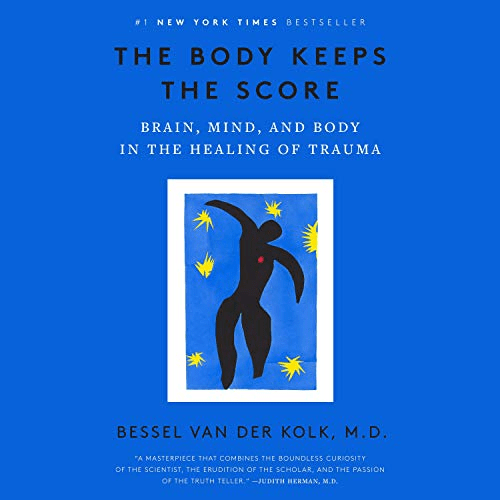
They’re both fascinating reads, incorporating latest research on mind-body connection, and explains much about how stress, adverse experiences, and trauma impact our health and genetics.
Additional recommendations:
- Information on Polyvagal Theory. This video by Sukie Baxter also explains quite well.
- Books by Peter A. Levine, PhD
Please feel free to call Dr. Lin at 408-828-8375 or send an email to inquire further.
 Ellen J. Lin, PhD
You must be logged in to post a comment.